Decrypting Volatility Patterns in Slot Machine Payouts to Inform Safer Session Planning
Katja Peters · May 27, 2026

Decrypting Volatility Patterns in Slot Machine Payouts to Inform Safer Session Planning
Slot machines rely on certified random number generators that produce independent results for each spin, yet aggregated data from regulatory testing reveals distinct volatility classifications that separate games into low, medium, and high categories based on the distribution of wins over extended play periods. Low-volatility titles deliver smaller payouts at higher frequencies, while high-volatility options produce larger but less frequent returns according to laboratory simulations conducted by testing agencies. Manufacturers submit machines for evaluation under standards set by bodies such as the Nevada Gaming Control Board, where thousands of simulated spins establish the mathematical profile that operators later publish through return-to-player percentages. These profiles show that a game labeled 96 percent RTP still distributes outcomes across wide variance bands, meaning short sessions can deviate significantly from the long-term average.Defining Volatility Through Regulatory Data
Testing laboratories record payout distributions during certification, and those records indicate that high-volatility slots often require several hundred spins before a statistically meaningful win appears in sample runs. Medium-volatility games balance frequency and size more evenly, producing observable clusters of modest returns interspersed with occasional larger hits. Observers note that players who review published volatility indexes from state regulators gain clearer expectations about how bankroll requirements align with chosen titles.
Figures released in early 2026 by multiple North American jurisdictions documented average session lengths and corresponding payout patterns across thousands of machines, confirming that variance remains the dominant factor separating one title from another even when RTP percentages sit close together.
Examining Payout Distributions in Practice
Electronic gaming data collected by the New Jersey Division of Gaming Enforcement tracks actual play across licensed casinos, and the resulting datasets illustrate how high-volatility machines generate extended dry spells followed by concentrated payout events. These patterns emerge only after analysts compile millions of individual spins, because single sessions rarely contain enough trials to reveal the underlying distribution.
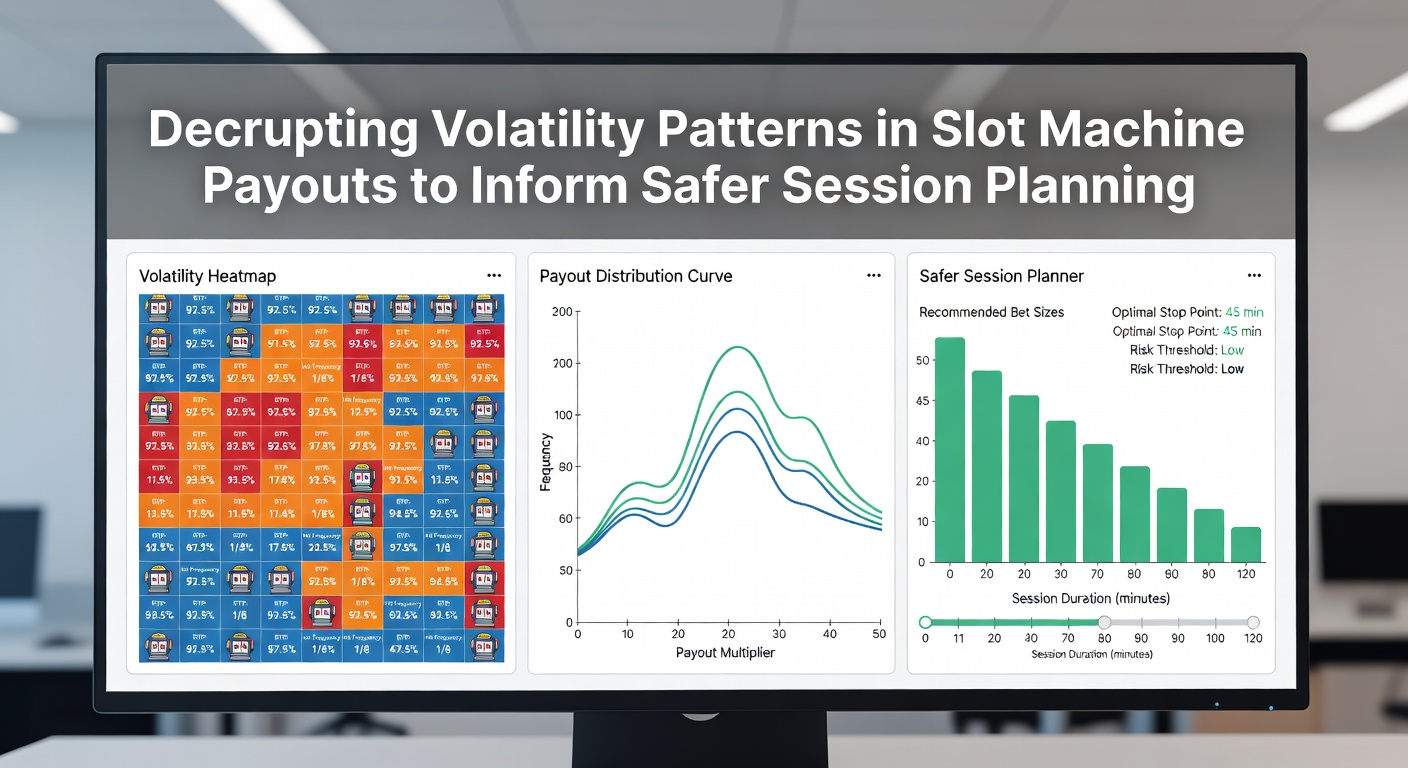
Researchers at institutions such as the University of Nevada, Las Vegas have published peer-reviewed examinations of these distributions, demonstrating that session length directly affects the probability of reaching a machine's expected return range. Shorter sessions amplify the effect of variance, whereas longer continuous play allows the law of large numbers to pull outcomes closer to the certified RTP.
Statistical Tools for Pattern Recognition
Modern casino management systems log timestamped payout events that third-party analysts later aggregate to map volatility signatures without accessing individual player accounts. These anonymized records show recurring intervals between major wins on high-volatility titles, intervals that lengthen or shorten according to the game's certified parameters rather than any predictable cycle.
Reports compiled through May 2026 by Australian state regulators further confirmed that volatility metrics remain stable across software updates when the underlying random number generator algorithms stay unchanged, giving operators consistent benchmarks for categorizing new releases.
Connecting Volatility Data to Session Parameters
Bankroll allocation models derived from regulatory simulations indicate that participants facing high-volatility selections typically require larger reserves to accommodate longer sequences without returns. Data aggregated from multiple Canadian provincial gaming commissions illustrates that machines with elevated variance indexes correspond to wider spreads between minimum and maximum observed session outcomes.
Software platforms now embed volatility filters that sort games according to these certified profiles, allowing users to cross-reference published figures before selecting titles. Such filters draw directly from laboratory test results rather than live play telemetry, preserving the integrity of the original certification data.
Conclusion
Regulatory datasets and academic analyses together establish that volatility patterns in slot machines arise from measurable statistical properties rather than observable short-term sequences. Players who consult published indexes from testing authorities and government gaming bodies obtain factual parameters that describe expected payout distributions over extended trials. These parameters, when combined with recorded session length statistics, supply objective inputs for structuring play periods around documented variance characteristics. Continued publication of anonymized payout records by regional regulators supports ongoing refinement of these distribution models across jurisdictions.