Wearable Tech Integration for Monitoring Player Fatigue in Extended Online Poker Sessions
Katja Walter · Jun 20, 2026
Wearable Tech Integration for Monitoring Player Fatigue in Extended Online Poker Sessions
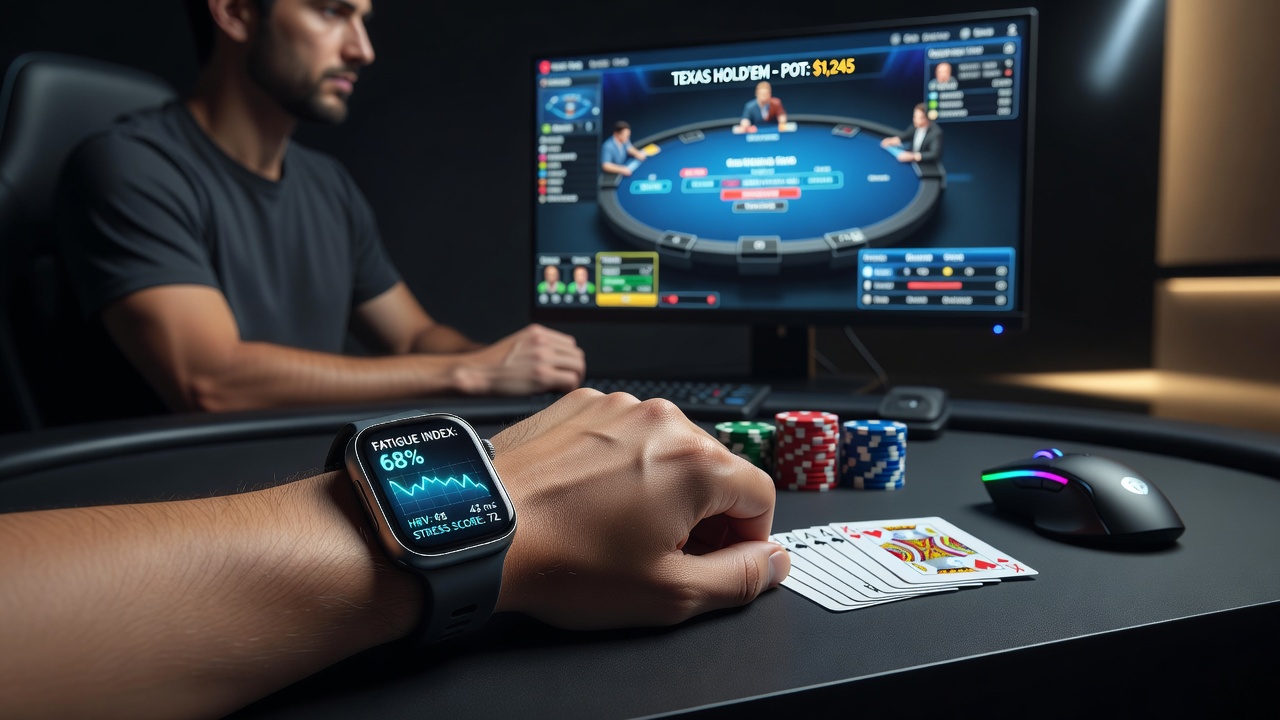
Online poker platforms continue to expand session lengths as players chase extended play opportunities, yet prolonged screen time often leads to measurable declines in decision accuracy and reaction speed. Wearable devices now track physiological signals in real time, feeding data directly into poker software so participants receive alerts when fatigue indicators rise above established thresholds. Researchers at several academic institutions have documented how heart rate variability, skin conductance, and movement patterns correlate with cognitive performance drops during multi-hour tournaments.
Core Metrics Captured by Consumer Wearables
Modern wrist-worn sensors measure heart rate variability at one-second intervals, while optical sensors detect subtle changes in blood oxygen saturation that often precede lapses in focus. Accelerometers built into the same devices record micro-movements that signal restlessness or slouching, both associated with waning concentration after four or five hours of continuous play. Software developers have begun mapping these raw values to poker-specific risk models, allowing platforms to suggest breaks or reduced stake recommendations when readings cross preset limits.
Platform Integration Examples Emerging in 2026
Several major poker networks introduced API connections in early 2026 that pull live data from popular fitness trackers, and observers note the first widespread testing occurred during June 2026 satellite events leading into larger festival schedules. These connections operate through encrypted channels so that only anonymized fatigue scores reach the server, preserving player privacy while still enabling session adjustments. One integration pairs device output with on-screen timers that automatically dim or pause when fatigue scores exceed operator-defined parameters.
Data Transmission and Privacy Protocols
Encrypted Bluetooth connections send readings to a companion mobile application that then forwards processed scores to the poker client. Developers implemented end-to-end encryption standards aligned with emerging data-protection guidelines from Canadian and Australian regulatory bodies, ensuring raw biometric streams never leave the player’s device unencrypted. Aggregated datasets from these integrations have already informed academic studies examining how fatigue patterns differ between cash-game grinders and tournament specialists across various time zones.
Research Findings on Performance Correlation
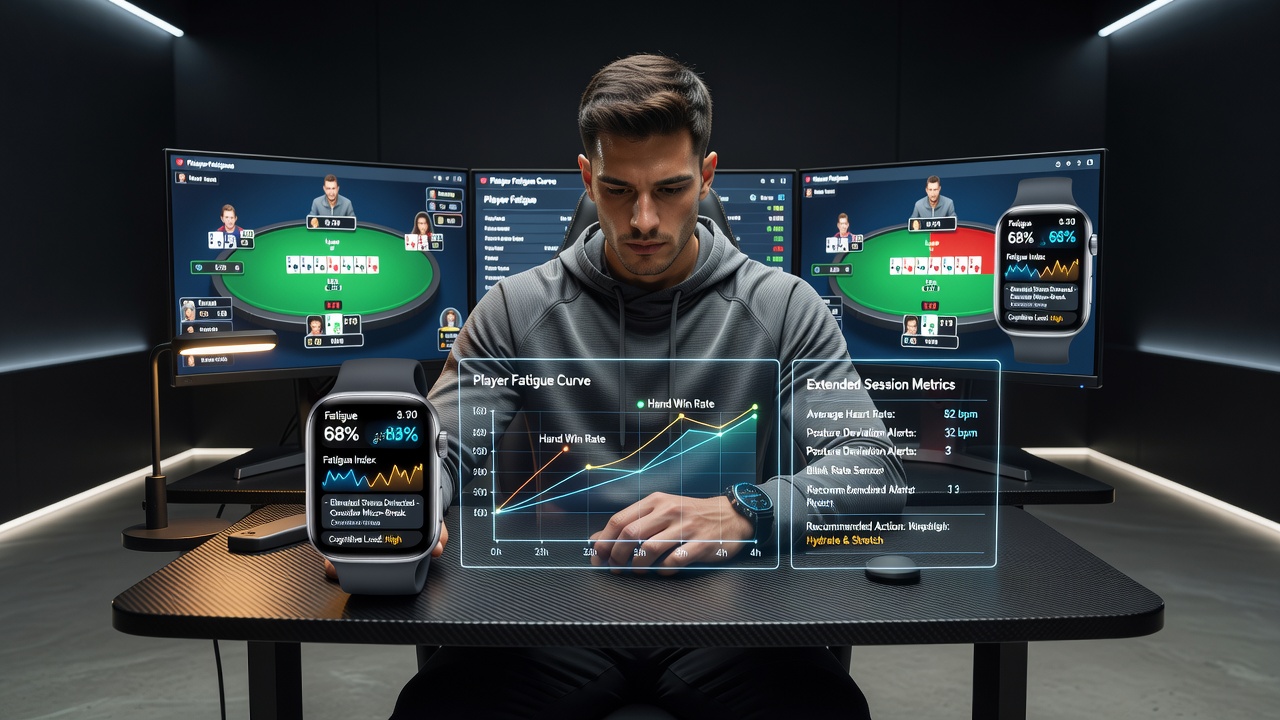
Studies conducted at the University of Nevada’s gaming research center found that players whose heart-rate variability dropped below 35 milliseconds during sessions exhibited a 22 percent increase in suboptimal betting decisions compared with baseline measurements taken earlier in the same session. Similar patterns appeared in datasets collected through partnerships with European research consortia, where skin temperature fluctuations above 1.2 degrees Celsius over thirty minutes also predicted extended reaction times. These correlations hold across skill levels, although professional players tend to show slower fatigue onset than recreational participants under identical conditions.
Regulatory Considerations Across Jurisdictions
Operators in markets such as New Jersey and Ontario have begun requiring fatigue-monitoring disclosures in responsible-gaming policies, while Australian state regulators requested voluntary reporting on how wearable integrations affect session-length statistics. The approach aligns with broader industry efforts to reduce problem-gambling indicators without mandating device usage. Data from these programs remains under review by independent auditors who compare pre-integration and post-integration metrics on player break frequency and average session duration.
Future Hardware Developments
Manufacturers are testing ear-worn sensors that capture both heart rate and electroencephalogram signals, potentially offering earlier detection of attention lapses than wrist-based devices alone. Early prototypes demonstrated in 2026 trade shows transmit data to poker clients via low-energy protocols that maintain battery life through full-day sessions. Integration teams continue refining algorithms that distinguish between physical fatigue and emotional tilt, allowing more precise interventions such as guided breathing prompts delivered through the same wearable interface.
Conclusion
Wearable integration for fatigue monitoring now forms part of the standard toolkit available to online poker operators seeking measurable ways to support extended play without compromising decision quality. Continued refinement of sensor accuracy, combined with expanding regulatory frameworks in multiple regions, points toward wider adoption throughout the remainder of 2026 and beyond. Players who connect compatible devices gain access to personalized alerts that reflect their individual physiological responses rather than generic time-based recommendations.